The aim of this report is to provide a stock take of the situations in the energy sector of Nauru and therefore inform a baseline which can be used in the development of the Nauru Energy Road Map (NERM). As such, this report containst:
General country context (geography, economy, population, etc.);
Energy sector landscape covering supply and demand and institutional arrangements;
Experience, potential and challenges in the use of renewable energy and energy efficiency; and,
In July 2001, ESCAP advised island governments and PROs, that ESCAP intended to send a mission to the Pacific Region and would entertain requests for specific technical assistance related to sustainable energy development. Requests for assistance were received from six countries, Cook Islands, Tonga, Fiji, Vanuatu, Tuvalu and Kiribati. The request from Vanuatu was for a technical consultancy on geothermal energy and will be fulfilled separately by a consultant contracted by ESCAP.
This review report was prepared by an external consultant,Peter Johnston, with the support of the Pacifc Region Infrastructure Facility (PRIF) and the Pacifc Community (SPC).
The Independent Consumer and Competition Commission (“ICCC”) is a statutory body established under the provisions of the Independent Consumer and Competition Commission Act 2002 (“the ICCC Act”). The ICCC is vested with responsibilities under the ICCC Act to
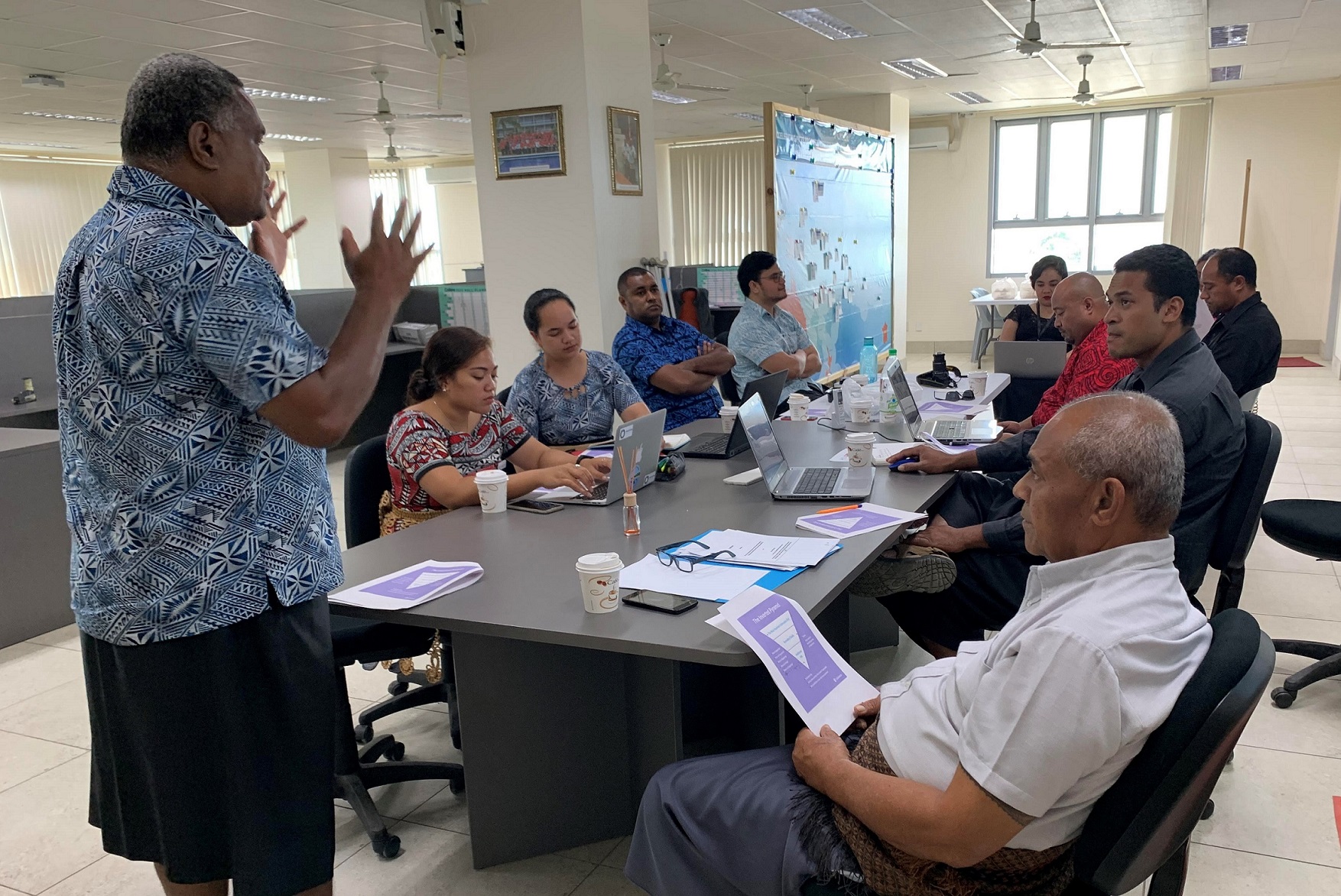
The 7th meeting of the PEAG was held jointly with The Heads of Maritime and Energy meeting was held in Port Vila, Vanuatu from 7th to 9th December 2016. The meeting was organized and co-hosted by the Government of the Republic of Vanuatu, the Pacific Community (SPC), the International Maritime Organization (IMO) and the World Bank.
This report is a publication of the Pacific Power Association (PPA). The report is based upon the 2017 fiscal reporting year relevant to each utility. Presents the results of the sixth successive annual assessment of Pacific electricity utility performance since 2011. Report prepared by PPA with technical support from the World Bank.
The 2017 exercise involves data from 22 power utilities compared to 17 for the 2016 Fiscal Year.
Datasets captures the petroleum imported to Samoa for the period 2009 - 2013, It highlights the quantity and value (in Tala) for fuel and LPG for the last five years.